Most property managers assume low voltage work means someone pulls a cable, plugs in a connector, and calls it done. That misconception is costly. The role of low voltage electrician covers a sophisticated range of systems, from security cameras and motorized gates to structured networks and cell signal boosters, all of which directly affect how safe, functional, and valuable your property is. Understanding what these professionals actually do, and what skills they need to do it well, is the difference between a facility that runs smoothly and one that generates constant complaints and repair bills.
Table of Contents
- Key takeaways
- The role of low voltage electrician in daily facility operations
- Essential skills and qualifications to look for
- Why low voltage systems are vital to your facility
- Working with low voltage electricians effectively
- What most property managers get wrong about this trade
- How Lowvoltagecorp helps facility managers get it right
- FAQ
Key takeaways
| Point | Details |
|---|---|
| Low voltage spans many systems | Security cameras, access control, networks, and automation all fall under low voltage work in commercial and residential facilities. |
| Troubleshooting is the core job | Most of a technician’s time is spent diagnosing problems, not just installing systems, requiring deep technical knowledge. |
| Credentials and licensing matter | Look for certifications like BICSI or NICET, and verify state licensing before hiring any low voltage contractor. |
| Neglect carries real costs | Skipping routine maintenance or hiring underqualified technicians leads to system failures, safety gaps, and expensive retrofits. |
| Facility managers can lead proactively | Scheduling assessments alongside other routine maintenance prevents most compatibility and wiring failures before they escalate. |
The role of low voltage electrician in daily facility operations
The duties of low voltage electrician work go far beyond running cable through walls. At the core, these technicians install, configure, test, and maintain every system in your building that operates on low voltage circuits, typically under 50 volts. That includes security camera systems, access control panels, intercom systems, fire alarm wiring, structured data cabling, audio-visual infrastructure, motorized gate systems, wireless and wired networks, and cell signal boosters.
In a commercial facility, a single low voltage electrician may be responsible for an entire building’s communication backbone. Here is what their day-to-day scope typically looks like:
- Security system installation and maintenance: Running coaxial or Cat6 cable from cameras to recording equipment, configuring DVR and NVR systems, and testing camera angles and recording quality.
- Access control systems: Installing card readers, electric strikes, and magnetic locks, then programming user credentials and troubleshooting door release failures.
- Structured cabling: Designing and installing patch panels, running horizontal cabling, and terminating connections according to ANSI/TIA standards.
- Fire alarm low voltage wiring: Running initiating and notification device circuits per NFPA 72, coordinating with fire alarm panel technicians.
- Motorized gate systems: Installing control boards, loop detectors, safety edges, and remote entry devices, then programming open and close limits.
- Network infrastructure: Terminating Ethernet connections, installing wireless access points, and certifying cable runs with test equipment.
- Building automation and smart systems: Wiring sensors, thermostats, and controllers for HVAC, lighting, and energy management systems.
In residential versus commercial contexts, the complexity scales up dramatically. A single apartment complex may have hundreds of camera endpoints, multiple access-controlled entry points, and an entire structured cabling system connecting every unit. Low voltage technicians in that environment also work within building codes and must understand NEC Article 725, which governs Class 2 and Class 3 remote-control and signal circuits, to avoid violations that could affect your occupancy certificate.
Pro Tip: Always ask your low voltage contractor to provide as-built documentation after any installation or upgrade. That documentation tells future technicians exactly what was installed and where, cutting diagnostic time in half during any future service call.
Essential skills and qualifications to look for
When you are evaluating who to hire, low voltage electrician skills separate a contractor who gets the job done from one who causes the next problem. Security and fire alarm installers, one major segment of the low voltage workforce, number around 86,000 nationally with a median salary of $59,300. The market is competitive, but not every technician in it is equally qualified.
Here are the skill areas that distinguish a competent low voltage professional:
- Cabling knowledge and standards compliance. A qualified technician understands Cat5e, Cat6, Cat6A, coaxial, and fiber optic cabling. They know when each type is appropriate and how to install it correctly without signal degradation.
- Blueprint and schematic reading. Most commercial projects require reading floor plans and riser diagrams. A technician who cannot interpret these will make layout errors that are expensive to fix.
- Code familiarity. Beyond NEC Article 725, fire alarm wiring requires knowledge of NFPA 72. Violating these codes creates both legal exposure and genuine life safety risk on your property.
- System programming and configuration. Installing hardware is half the job. Configuring access control software, programming camera recording schedules, and setting up network VLANs requires software skills most people do not associate with electrical work.
- Diagnostic and troubleshooting ability. Most of a technician’s time is spent troubleshooting and repairing, not installing. This means a technician who can only pull cable is only partially useful to you.
- Safety practices and testing equipment. Low voltage does not mean no risk. Shock risk exists even under 50 volts, and professionals must use calibrated digital testers to confirm safe working conditions before touching any circuit.
- Licensing and certification. States vary widely. Wisconsin, for example, requires 4,000 hours of supervised experience under a licensed contractor before issuing credentials. Certifications from BICSI (for cabling infrastructure) and NICET (for fire alarm systems) signal formal competency beyond state minimums.
Pro Tip: When reviewing a technician’s resume or contractor profile, look for specific system brands they have configured, not just generic “low voltage experience.” A technician who has programmed Milestone VMS or Lenel access control systems is a fundamentally different hire than someone who has only pulled cable.
Why low voltage systems are vital to your facility
The importance of low voltage systems to property management is not abstract. These systems directly determine whether your tenants feel safe, whether your building complies with local codes, and whether your operational costs stay under control. Here is a comparison of what proper versus poor low voltage maintenance looks like in practice:
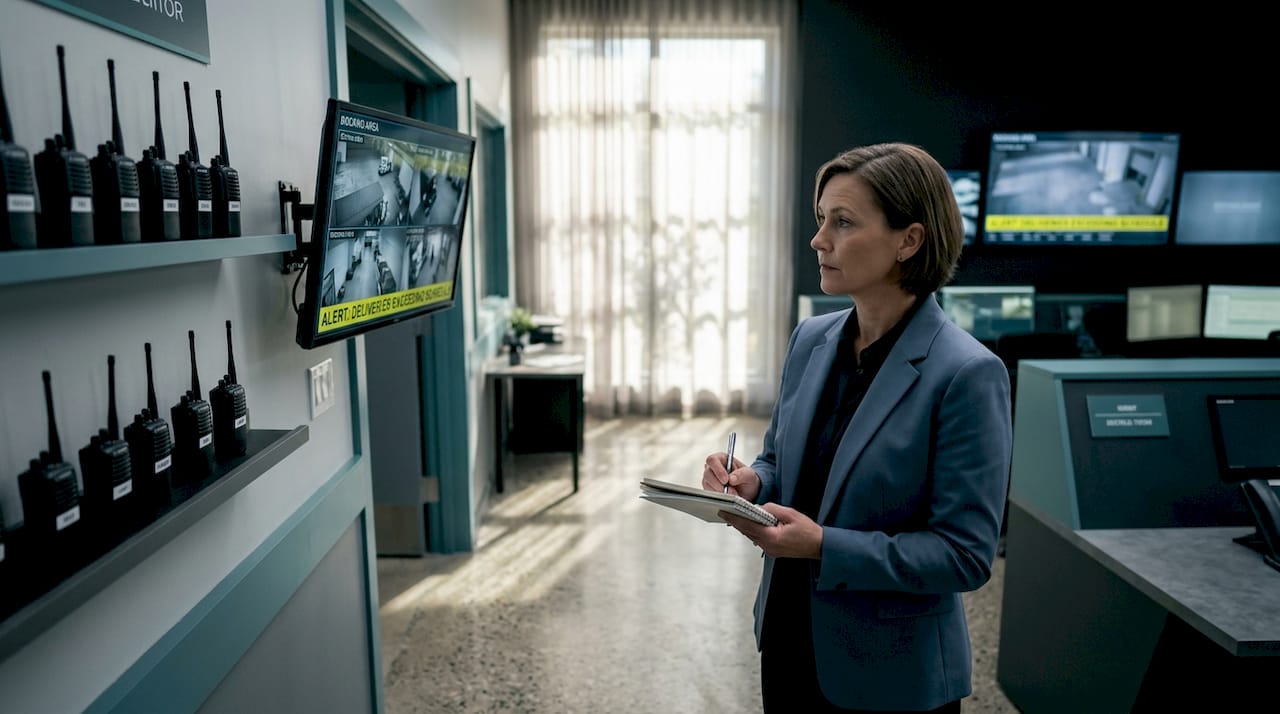
| Scenario | With qualified low voltage electrician | Without proper maintenance |
|---|---|---|
| Security camera failure | Diagnosed and repaired within hours; footage preserved | Days of downtime; potential liability gap |
| Access control malfunction | Remote diagnostics and firmware update | Lockout incidents; emergency locksmith costs |
| Network outage | Faulty cable termination found and corrected quickly | Tenant complaints; business interruption claims |
| Smart building automation | Sensors properly wired; energy savings realized | HVAC damage from improper wiring can cost $300 to $800 |
| Gate system failure | Preventive maintenance catches motor and board issues early | Emergency repair at premium rates; security gap |
Low voltage systems now sit at the center of smart building operations. Energy management controllers, occupancy sensors, and demand-response systems all rely on correctly installed and maintained low voltage wiring. When that infrastructure is sound, facility managers gain real data and real savings. When it is compromised, property managers need low voltage systems that work reliably, and the cost of neglect shows up fast, both in repair bills and in tenant turnover.
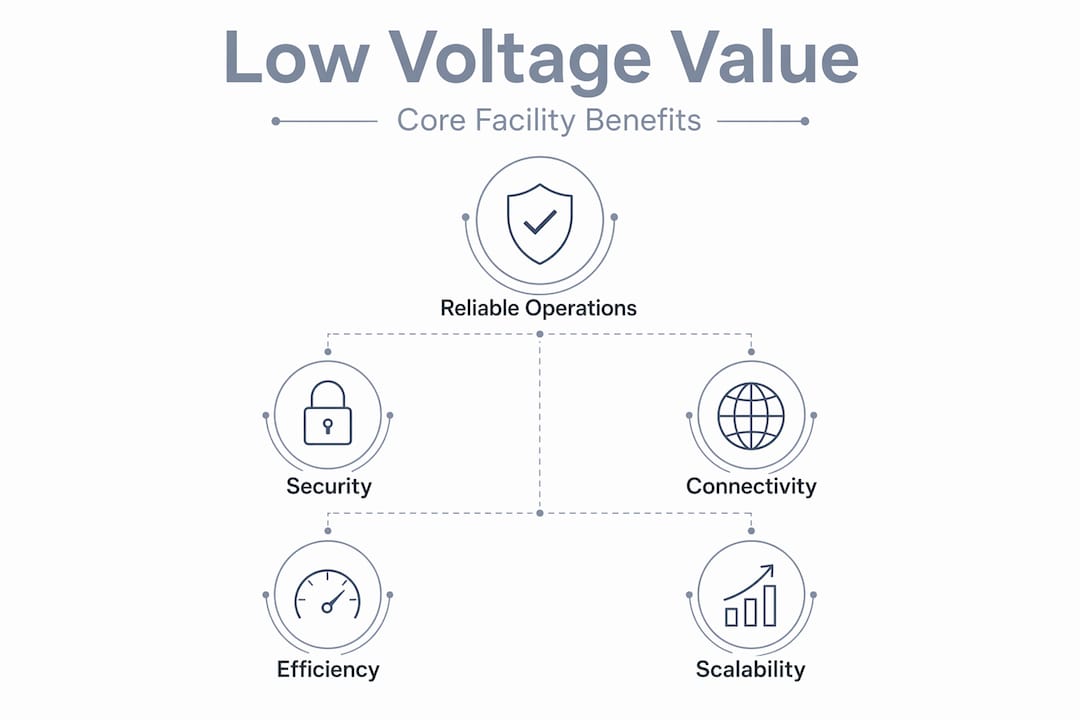
Routine compatibility assessments during scheduled maintenance cycles catch wiring mismatches and integration conflicts before they require expensive retrofits. That is a practice worth building into your maintenance calendar, not treating as optional.
Working with low voltage electricians effectively
Understanding the role is only useful if you can actually apply it. Here is how experienced facility managers get the most out of their low voltage contractors:
- Schedule inspections on a defined cycle. Annual inspections for camera and access control systems, biannual reviews of structured cabling integrity, and post-storm checks for gate systems and exterior cameras should all be on your calendar.
- Verify licensing and insurance before any work begins. A contractor who damages a tenant’s data infrastructure while unlicensed creates liability that falls on you. Get certificates of insurance and verify state license numbers independently.
- Request written scope of work for every project. Verbal agreements lead to disputes. A written scope that specifies cable types, system models, programming deliverables, and testing methods protects both parties.
- Coordinate low voltage work with other trades early. Drywall going up before cable runs are complete costs real money. Low voltage work is often squeezed into whatever time is left, and that creates shortcuts. Build coordination checkpoints into your project schedule.
- Evaluate qualifications beyond price. The lowest quote rarely reflects the actual cost. Improper wiring issues, such as missing continuous power wiring in smart thermostat installations, can cause system failures that cost far more to fix than the original job was worth.
- Understand the terminology before meetings. Familiarize yourself with low voltage terms so you can evaluate proposals accurately, ask the right questions, and spot when a contractor is oversimplifying or underspecifying.
The facility managers who get the best results treat their low voltage contractors as systems consultants, not just labor. That relationship pays off in faster diagnostics, better upgrade planning, and fewer emergency calls.
What most property managers get wrong about this trade
I have worked alongside property managers who run excellent facilities with one glaring blind spot: they treat low voltage work as a commodity. Need a camera installed? Call whoever is cheapest. Gate not working? Find someone who works on gates. That fragmented approach creates systems that do not talk to each other, documentation that does not exist, and troubleshooting nightmares the next time something fails.
In my experience, the hidden complexity in this trade lives in the integration layer. A camera system that works perfectly on its own may fail silently when it conflicts with network segmentation set up by a different contractor. An access control system may stop logging entries after a firmware update that nobody scheduled. These are not hardware problems. They are integration and configuration problems, and they require a technician who understands the full picture, not just their one piece of it.
What I have found actually works is establishing a primary low voltage contractor who knows your building’s infrastructure. One technician or team who has pulled the cable, programmed the systems, and documented the layout can diagnose and resolve issues in a fraction of the time a stranger to your building can. That continuity of knowledge is worth paying for. I have also learned that the best low voltage electricians proactively flag what is aging or undersized before it fails. If your contractor only shows up when something breaks, you have the wrong contractor.
— Aaron
How Lowvoltagecorp helps facility managers get it right
Running a commercial property means every system has to work, every day. Lowvoltagecorp specializes in exactly the kind of low voltage services that keep facilities running, from security camera installation and maintenance to motorized gate systems, wired and wireless network infrastructure, and cell booster solutions.

Lowvoltagecorp brings certified expertise to every job, with technicians who know your systems at the configuration level, not just the hardware level. Whether you need cost-saving security upgrades for a South Florida property or a rapid fix for cameras, gates, or network failures, fast issue resolution is available when you need it most. Property managers who partner with Lowvoltagecorp get documentation, accountability, and a team that understands the full integration picture across every low voltage system on their property. That is not a luxury. It is the standard every facility deserves.
FAQ
What does a low voltage electrician actually do?
A low voltage electrician installs, maintains, and repairs systems that operate under 50 volts, including security cameras, access control, structured cabling, motorized gates, wireless networks, and building automation systems. Troubleshooting and repair make up the majority of the day-to-day work.
What certifications should a low voltage electrician have?
Look for BICSI certification for cabling and network infrastructure work, and NICET certification for fire alarm systems. State licensing requirements vary, with some states requiring up to 4,000 hours of supervised experience before issuing credentials.
Why does low voltage system maintenance matter for property managers?
Poor maintenance or underqualified installations lead to security gaps, system outages, tenant complaints, and repair costs that far exceed what routine maintenance would have cost. Improper wiring alone can cause HVAC and automation damage in the $300 to $800 range per incident.
How often should low voltage systems be inspected?
Security cameras and access control systems should be inspected annually at minimum. Structured cabling integrity checks every two years and post-storm inspections for gate and exterior camera systems are also recommended best practices.
How is low voltage work different from standard electrical work?
Low voltage electricians specialize in signal, communication, and control circuits rather than power distribution. They must understand cabling standards, system programming, and codes like NEC Article 725 and NFPA 72, making their skill set distinct from a licensed electrician focused on high-voltage power systems.