Network cabling is the physical infrastructure that connects every device, system, and tenant service within a property. For property and facility managers in South Florida, the importance of network cabling goes far beyond running a few cables through walls. It determines whether your building’s data, voice, video surveillance, access control, and smart systems perform reliably or fail at the worst possible moment. Industry standards like ANSI/TIA-568 and ISO/IEC 11801 define what a properly designed system looks like, and technologies like VoIP, Category 6 cabling, and Wi-Fi 7 all depend on that physical foundation to deliver on their promises.
Why network cabling matters for property operations
A well-designed cabling system is not a convenience. It is the difference between a building that runs smoothly and one that generates constant complaints and repair calls. Structured cabling is a standardized infrastructure built from horizontal cabling, backbone cabling, patch panels, equipment rooms, and work area outlets. That organized design is what separates a manageable network from a chaotic one.
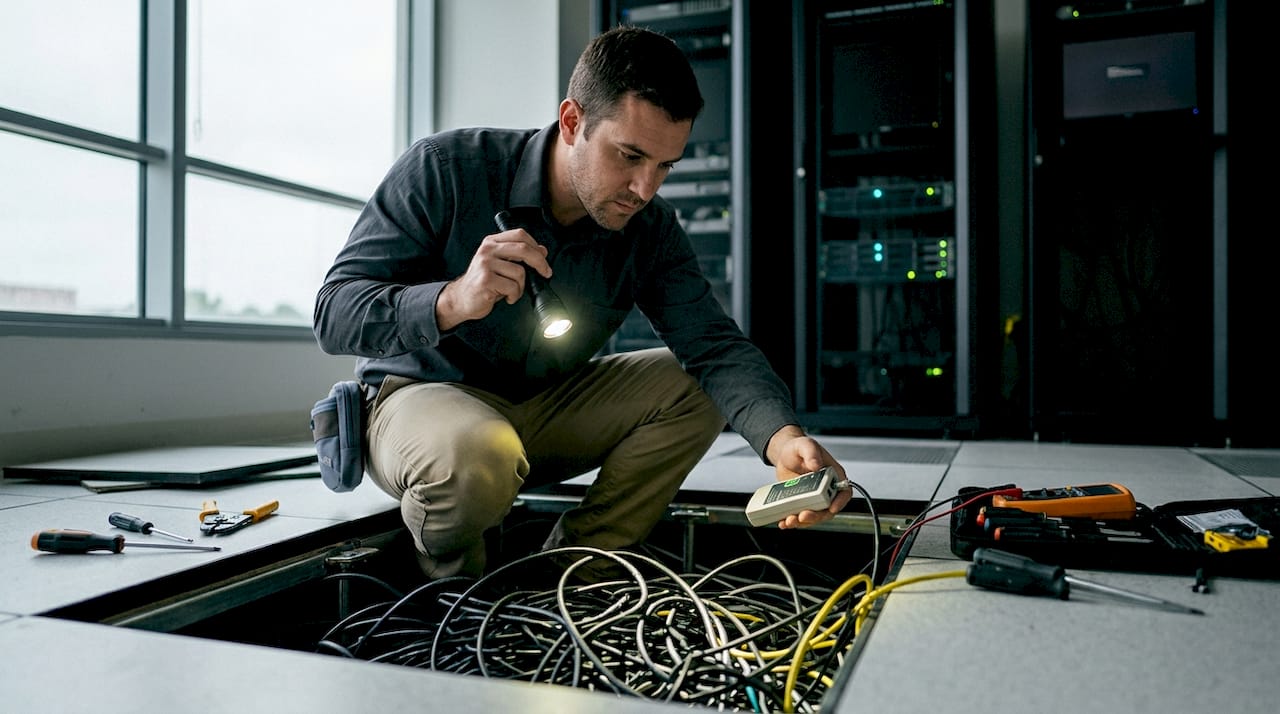
When a network issue occurs in an unstructured system, your technician is tracing unlabeled cables through ceiling tiles for hours. In a structured system, the fault is identified in minutes because every run is documented and labeled. Professional structured cabling significantly reduces troubleshooting time by turning reactive, hours-long tasks into quick identification. That speed directly protects tenant uptime and your reputation as a manager.
The role of cabling in networking also extends to scalability. When a tenant adds workstations, upgrades to VoIP phones, or installs a new access control reader, a structured system handles those moves, adds, and changes without full rewiring. That flexibility saves money on every future upgrade cycle.
How downtime affects tenant satisfaction
Tenants do not distinguish between a software problem and a cabling problem. They experience an outage, and they call you. Network downtime in commercial properties directly affects lease renewals, tenant satisfaction scores, and your ability to attract quality occupants. Organized cabling reduces that risk by making your network predictable and maintainable.
Pro Tip: Label every cable run at both ends during installation. Add a simple floor plan diagram to your maintenance binder. That documentation alone cuts troubleshooting time in half when something goes wrong six months later.
Key benefits of well-designed network infrastructure for property operations include:
- Faster fault identification when outages occur
- Simpler compliance with fire and building codes
- Reduced labor costs for moves, adds, and changes
- Consistent performance for VoIP, video conferencing, and surveillance systems
- Cleaner equipment rooms that support professional audits and inspections
Structured vs. unstructured cabling: what is the real difference?
The comparison between structured and unstructured cabling is not just technical. It is a financial and operational decision with long-term consequences for your property.
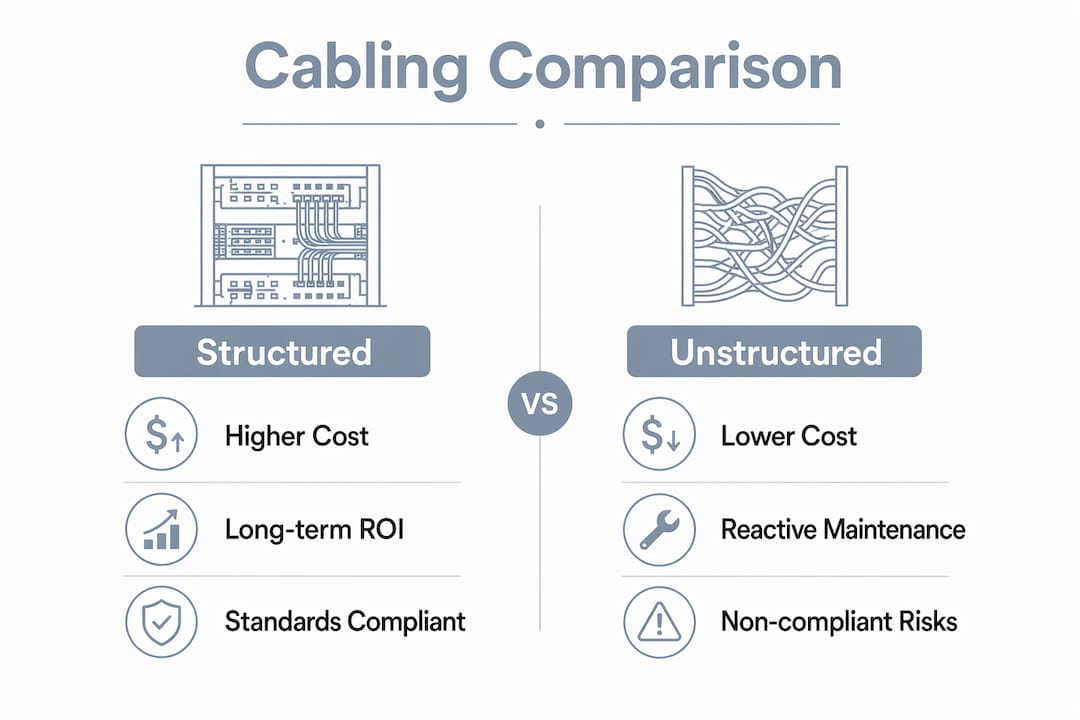
Structured cabling follows a planned, logical design governed by ANSI/TIA-568 and ISO/IEC 11801. Every component, from patch panels to horizontal runs to backbone cables, is installed with purpose and documented. Unstructured cabling, by contrast, grows reactively. Each new device gets a cable run added without a master plan. Over time, that approach creates what the industry calls “cabling debt.”
Cabling debt accumulates silently, where initial cost-saving decisions lead to ongoing reactive labor costs many times higher than a planned installation would have cost. Think of it like deferred HVAC maintenance. The savings feel real until the system fails and the repair bill arrives. In South Florida’s commercial buildings, where humidity and heat stress infrastructure year-round, that debt compounds faster than in cooler climates.
Structured cabling requires higher upfront investment than unstructured approaches, but it yields measurable ROI through reduced IT labor costs, longer network lifespan, and avoided emergency re-cabling. Certified installations also typically include manufacturer warranties on parts and labor, which protects your capital budget.
| Factor | Structured Cabling | Unstructured Cabling |
|---|---|---|
| Upfront cost | Higher | Lower |
| Long-term labor cost | Lower | Higher |
| Troubleshooting speed | Fast, documented | Slow, reactive |
| Scalability | Built-in | Disruptive rewiring required |
| Code compliance | Meets ANSI/TIA-568 standards | Often non-compliant |
| Warranty coverage | Manufacturer warranty available | Typically none |
One compliance issue specific to South Florida deserves attention. Non-compliant cabling in plenum air spaces is a frequent fire code violation in commercial buildings. Plenum-rated cables are required in ceiling spaces that serve as air return pathways. Non-plenum cables in those spaces violate fire codes and create liability exposure for property managers. Professional installers familiar with South Florida regulations handle this correctly from the start.
Pro Tip: Never let a low-bid contractor skip plenum-rated cable in ceiling spaces to save money. That shortcut creates fire code violations that can surface during inspections, insurance reviews, or tenant build-outs.
How does cabling quality affect advanced technologies and security?
Every advanced technology in your building sits on top of your physical cabling layer. That relationship is direct and unforgiving. Poor physical backbone hinders technology regardless of the quality of the connected hardware. You can install the best Wi-Fi 7 access points available and still deliver poor performance if the cabling feeding those access points is substandard.
The advantages of good cabling show up clearly in security systems. Video surveillance cameras require consistent bandwidth to transmit high-resolution footage without dropped frames. Access control systems need reliable data connections to log entries and trigger alerts in real time. When cabling is disorganized or degraded, those systems produce gaps in coverage precisely when you need them most.
Organized cabling aids detection of unauthorized tampering and forms a foundational layer of cybersecurity. A documented, standardized system makes it immediately obvious when a new, unauthorized connection appears in your network rack. That visibility is something a tangled, unlabeled system cannot provide.
Specific technologies that depend directly on cabling quality include:
- Wi-Fi 7 access points: Require Cat 6A or higher to deliver full throughput
- VoIP phone systems: Sensitive to packet loss caused by cable interference or poor terminations
- IP video surveillance: Needs consistent bandwidth and low latency for uninterrupted recording
- AI-integrated building systems: Require stable, low-latency connections for real-time data processing
- Smart access control: Depends on reliable data links for credential verification and audit logging
Structured cabling supports scalability for evolving building technologies like AI-integrated systems without frequent disruptive rewiring. That matters for South Florida properties where tenant technology expectations are rising and smart building features are becoming a competitive differentiator.
For properties that also rely on AI-grade security systems, the cabling infrastructure is what makes those systems perform at spec rather than just technically function.
What steps should property managers take to improve their cabling?
Improving your network infrastructure does not require replacing everything at once. A structured approach to assessment and upgrades produces better results and protects your budget.
-
Audit your existing cabling. Walk your equipment rooms and identify unlabeled cables, damaged runs, and non-compliant installations. Note any areas where cables are bundled with power lines, which causes interference.
-
Document what you find. Create a simple floor plan showing cable routes, panel locations, and device connections. This documentation becomes your baseline and your maintenance reference.
-
Identify compliance gaps. Check whether ceiling-space cables are plenum-rated. Confirm that your installation meets ANSI/TIA-568 standards. Flag anything that would fail a fire inspection or insurance review.
-
Prioritize high-impact areas first. Focus initial upgrades on spaces with the highest tenant density or the most critical systems, such as server rooms, lobby access control points, and security camera hubs.
-
Hire certified installers with South Florida experience. Local knowledge of building codes, humidity considerations, and permit requirements matters. A certified installer also provides documentation and warranty coverage that protects your investment.
-
Schedule routine inspections. Set annual or biannual reviews of your cabling infrastructure. Check terminations, test cable performance, and update your documentation when changes occur.
For a deeper look at cable types for South Florida properties, the specific material choices matter as much as the installation quality in this climate.
Pro Tip: Prioritize cabling upgrades in tenant-facing areas before back-of-house spaces. Tenants notice connectivity problems in conference rooms and common areas long before they notice issues in utility closets.
Key takeaways
Structured cabling is the physical foundation that determines whether every technology in your building performs reliably, scales without disruption, and meets South Florida fire and safety codes.
| Point | Details |
|---|---|
| Structured cabling reduces downtime | Documented, labeled systems cut fault identification from hours to minutes. |
| Cabling debt is a real cost | Unstructured systems generate ongoing labor costs that exceed structured installation savings. |
| Compliance protects your liability | Plenum-rated cables in ceiling spaces are required by fire code in South Florida commercial buildings. |
| Advanced tech needs quality cabling | Wi-Fi 7, VoIP, and IP surveillance all underperform on substandard physical infrastructure. |
| Audits come before upgrades | A documented baseline assessment guides smarter, phased investment decisions. |
What i have learned after years of working in south florida buildings
The most consistent mistake I see property managers make is treating cabling as a sunk cost rather than an active asset. They budget for security cameras, access control systems, and Wi-Fi upgrades, then try to save money by keeping the old cabling underneath all of it. The result is predictable. The new technology underperforms, tenants complain, and the manager assumes the equipment is defective. The cabling is almost never the first suspect, but it is often the actual cause.
Managers frequently underestimate cabling as a critical asset rather than a sunk cost, which leads to poor investment decisions across the board. I have walked into equipment rooms in South Florida commercial buildings where 15 years of reactive cable additions had created a situation where nobody could confidently trace a single run from end to end. That is not just an inconvenience. It is a liability.
The properties that run well are the ones where someone made a deliberate decision to treat the physical network as infrastructure worth maintaining, the same way they treat the HVAC system or the elevator. Organized cabling eases IT workload, enabling teams to focus on strategic work instead of constant troubleshooting. That principle applies equally to your maintenance staff and your contracted technicians.
My honest recommendation: if you have not done a cabling audit in the past three years, schedule one before your next technology upgrade. You will either confirm your infrastructure is solid, or you will find the root cause of problems you have been chasing for months.
— Aaron
How Lowvoltagecorp supports south florida property managers
Lowvoltagecorp specializes in structured cabling installation, repair, and maintenance for commercial properties across South Florida. The team understands local fire codes, plenum requirements, and the specific demands that South Florida’s climate places on network infrastructure. Whether you need a full cabling audit, a new installation built to ANSI/TIA-568 standards, or targeted repairs to an existing system, Lowvoltagecorp delivers work that is documented, warranted, and built to last.

For property managers ready to stop chasing network problems and start managing a reliable infrastructure, the wired network benefits page outlines exactly what a properly installed system delivers for your tenants and your bottom line. You can also explore cost-saving security upgrades that combine cabling improvements with security system enhancements for maximum ROI.
FAQ
What is the importance of network cabling in commercial buildings?
Network cabling is the physical infrastructure that carries data, voice, video, and security signals throughout a building. Without a properly designed cabling system, every connected technology in the property operates below its potential.
What is structured cabling and why does it matter?
Structured cabling is a standardized system of cabling components governed by ANSI/TIA-568 and ISO/IEC 11801. It matters because it makes networks predictable, maintainable, and scalable without disruptive rewiring.
How does cabling affect network performance?
Cable quality, termination accuracy, and routing all directly affect data transmission speed and reliability. Substandard cabling causes packet loss, interference, and dropped connections that degrade VoIP, video surveillance, and Wi-Fi performance.
Are there specific cabling codes for south florida buildings?
Yes. South Florida commercial buildings require plenum-rated cables in ceiling air spaces to meet fire codes. Non-compliant installations create liability exposure and can fail inspections during tenant build-outs or insurance reviews.
How often should property managers inspect their cabling infrastructure?
Annual or biannual inspections are the standard recommendation for commercial properties. Inspections should include cable testing, termination checks, documentation updates, and a review of any changes made since the last audit.