Most property and facility managers assume “low voltage” refers to anything running below 50 volts. That assumption has quietly caused planning errors, failed inspections, and expensive rework for years. This guide to low voltage systems cuts through that confusion by addressing how NEC 2026 formally reclassifies these systems as “limited energy,” what that means for your building, and how to make informed decisions about security cameras, access control, networks, and communications infrastructure. Whether you are managing a single commercial property or a portfolio, this guide gives you the technical grounding you need without the electrical engineering degree.
Table of Contents
- Key takeaways
- Your guide to low voltage systems under NEC 2026
- Structured cabling: the physical foundation
- Key components of low voltage systems
- Planning for scalability and PoE power budgets
- Best practices for installation and labeling
- My take on the limited energy shift
- Ready to upgrade your building’s systems?
- FAQ
Key takeaways
| Point | Details |
|---|---|
| “Low voltage” is changing | NEC 2026 now defines these as “limited energy” systems, which affects labeling, routing, and inspections. |
| Structured cabling is your backbone | Following ANSI/TIA-568.1-D standards for cabling architecture prevents costly rework and supports device growth. |
| Components group by function | Organizing components into protection, control, distribution, monitoring, and automation blocks simplifies maintenance. |
| PoE budgeting matters more than cable grade | Underestimating switch power capacity is the leading cause of system failures during expansion. |
| Documentation drives compliance | Consistent labeling with limited energy terminology speeds inspections and reduces field disputes. |
Your guide to low voltage systems under NEC 2026
Here is something most vendors will not tell you up front: the term “low voltage” no longer has a single, clear legal definition under the current electrical code. NEC 2026 introduces “Limited Energy” definitions in Article 100, replacing the vague and inconsistently applied terminology that has been part of the industry for decades. The classification is now based on power characteristics and fault behavior, not simply voltage level.
This matters because it changes what is required on your job site, in your permit applications, and during inspections. Several NEC articles govern these systems in 2026, including Articles 720 through 723, 742, and 750, each covering different system types and their installation requirements. Your installers and contractors need to be working from the correct articles, and you need to know which systems fall under which rules.
Here is what changed in practice:
- Labeling requirements now reference “limited energy” terminology rather than generic low voltage labels
- Routing and separation rules are clarified, specifying where limited energy circuits can share pathways with power circuits and where they cannot
- Bonding and grounding practices for ICT (information and communications technology) systems now align with the general NEC framework instead of the separate Chapter 8 exemptions that previously applied
- Documentation submitted to the authority having jurisdiction (AHJ) must reflect the updated terminology to avoid delays
Pro Tip: Ask your low voltage contractor to provide a code-referenced scope document before work begins. If they are still labeling everything “low voltage” without distinguishing system types and applicable NEC articles, that is a red flag for compliance issues down the line.
For a deeper breakdown of how the limited energy terminology applies to your specific systems, it is worth getting familiar with the vocabulary before your next project.
Structured cabling: the physical foundation
Before any camera goes on the wall or access reader gets mounted, the cabling infrastructure underneath needs to be planned correctly. The governing standard here is ANSI/TIA-568.1-D, which defines the architecture for commercial building telecommunications cabling. Understanding it gives you a map for how every device in your building connects back to the core.
The standard defines six key subsystems:
- Entrance facility — Where outside cabling (internet, telecom) enters the building and connects to your internal network
- Equipment room — The centralized space housing servers, core switches, and main distribution hardware
- Telecommunications rooms (or enclosures) — Intermediate distribution points on each floor or zone
- Backbone cabling — The high-capacity runs connecting the equipment room to telecom rooms
- Horizontal cabling — Individual cable runs from telecom rooms to each device location (cameras, access points, readers)
- Work areas — The endpoints where devices physically connect
Every security camera, Wi-Fi access point, and access control reader you deploy maps to horizontal cabling and a telecom room. Mapping device locations early to these subsystems before installation dramatically reduces the chance of needing to reroute cable later. It also makes future upgrades far cleaner.
| Cabling subsystem | Typical devices served | Key planning consideration |
|---|---|---|
| Horizontal cabling | Cameras, access readers, Wi-Fi APs | Max 295-foot run length including patch cables |
| Backbone cabling | Switches, patch panels between floors | Fiber preferred for runs over 100 meters |
| Telecom rooms | PoE switches, patch panels, local UPS | Plan for 30% growth capacity in rack space |
| Equipment room | Core switches, servers, main UPS | Climate control and physical access control required |
Key components of low voltage systems
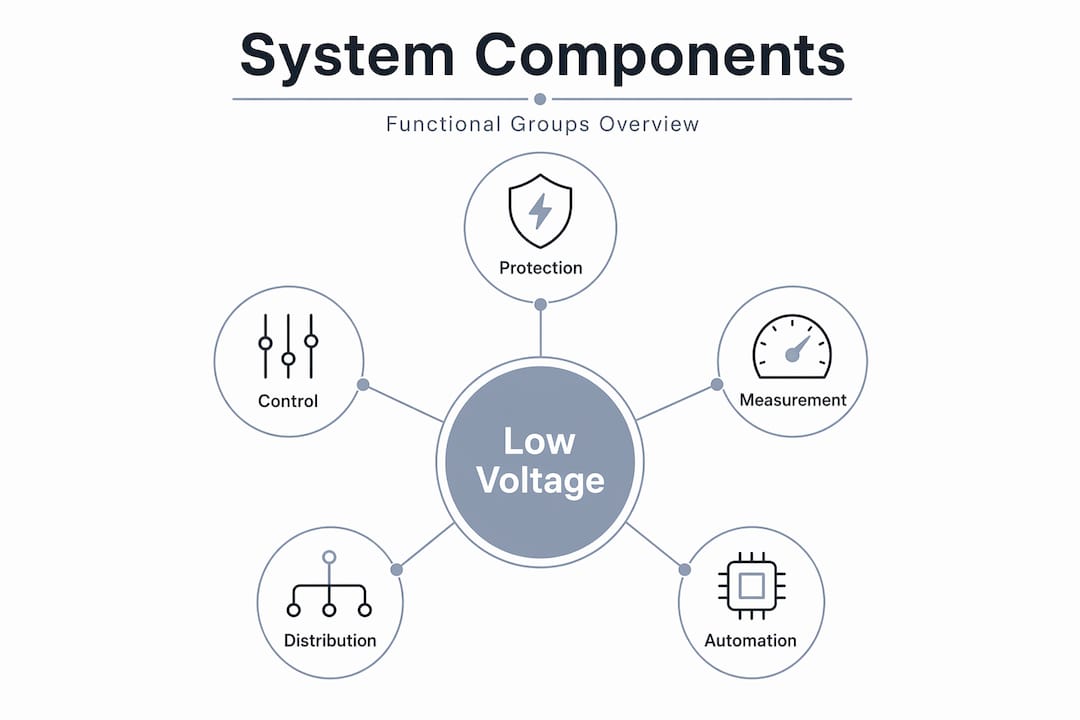
Understanding low voltage system components means thinking in functional groups rather than individual devices. Components are best categorized into five blocks: protection, control, measurement and monitoring, distribution, and automation and communication. Each block has a distinct role in keeping your systems online and maintainable.
Protection components include circuit breakers, fuses, and surge protection devices (SPDs). These are your first line of defense against faults, power surges, and overloads. SPDs are often overlooked in security camera and network installations but are critical in Florida where lightning events are frequent.
Control components include relays, contactors, and programmable logic controllers (PLCs). In a commercial property context, these govern how systems respond to triggers. A relay that controls door locks during a fire alarm is a control component. So is the logic board in a motorized gate controller.
Measurement and monitoring components cover current sensors, voltage monitors, and network management interfaces. These let you verify that your systems are operating within spec and catch problems before they cause outages.
Distribution components include switches, patch panels, structured wiring panels, and PoE injectors. These physically route signals and power to devices. Getting distribution right is where most property managers can create genuine long-term value.
Automation and communication components are the devices that tie systems together: video management software, access control panels, cell boosters, and network management platforms.
Pro Tip: When building a maintenance checklist, organize it by these five functional blocks rather than by device type. A maintenance plan centered on functional groups means your technician knows exactly which category failed when something goes down, cutting diagnostic time significantly.
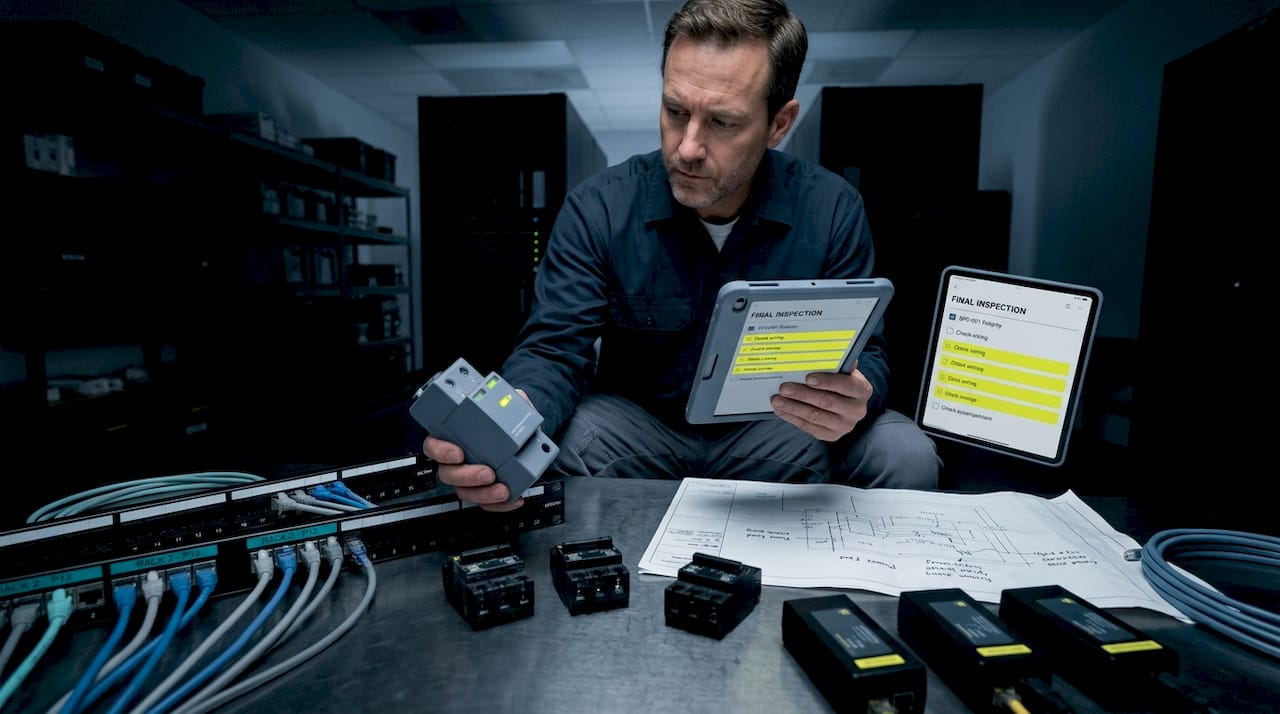
A major mistake property managers make is treating protection and distribution as afterthoughts. Buying higher-end cameras but skimping on SPDs or an undersized PoE switch creates a system that looks good on paper but fails under real-world conditions.
Planning for scalability and PoE power budgets
This is where most property managers lose money. Not during the initial installation, but two or three years later when they want to add cameras or upgrade access control and discover the infrastructure cannot support it. Planning for five to seven years of device growth is not a luxury. It is the difference between a $500 switch upgrade and a $15,000 recabling project.
Follow this process when reviewing cabling and power planning with your contractor:
- Audit current and planned device counts per telecom room zone. Include everything that will draw PoE power: cameras, access readers, intercoms, Wi-Fi access points.
- Calculate your actual PoE power draw. A 30-port PoE switch rated at 370 watts total budget sounds like plenty until you have 20 cameras drawing 15 watts each. That is already 300 watts before accounting for access readers or APs.
- Choose Cat6A over Cat6 for new runs whenever your budget allows. Cat6A supports higher bandwidth and the 802.3bt PoE standard, which is increasingly required for modern high-resolution cameras and powered devices.
- Verify switch capacity against your power budget before finalizing the design. Many switches advertise port counts but have total power budgets that only support partial port loading.
- Plan distribution zones strategically. Putting all cameras on one switch and all access readers on another creates cleaner maintenance boundaries and prevents a single point of failure from taking down multiple system types simultaneously.
Pro Tip: Power budgeting is often the real constraint when expanding PoE-powered systems, not cable type. Get a power budget spreadsheet from your contractor before finalizing any switch purchase.
Best practices for installation and labeling
Good installation practice comes down to discipline in three areas: separation, labeling, and documentation. ICT systems are now fully subject to NEC Chapters 1 through 7, which means the old informal approaches that relied on Chapter 8 exemptions are no longer valid. Your contractors need to know this.
Key best practices to hold your installation team accountable to:
- Separate power and limited energy circuits in dedicated pathways and raceways. They cannot share conduit unless specific separation or shielding conditions are met per NEC.
- Label every pathway, raceway, and enclosure with limited energy terminology and the applicable NEC article. Labels referencing limited energy terms speed AHJ inspections and reduce back-and-forth with the inspector.
- Maintain consistent documentation across as-built drawings, panel schedules, and rack diagrams. Inconsistency between what is drawn and what is installed is one of the top causes of failed inspections.
- Manage your telecom rooms properly. Congested patch panels with unlabeled cables are a leading driver of downtime. Poor telecom room administration directly increases fault isolation time during outages.
- Plan maintenance around functional component groups. Schedule regular checks of protection devices, SPDs, and distribution hardware separately from communications and automation components.
Pro Tip: Review low voltage safety practices with your team before any maintenance window. Even limited energy systems carry real risks when improper procedures are followed near live panels or PoE switches.
My take on the limited energy shift
I have worked with property managers who spent significant money on security camera upgrades only to have the installation fail inspection because the contractor used outdated low voltage labeling that no longer matched NEC 2026 requirements. That is a painful and preventable problem.
In my experience, the biggest mistake property managers make is delegating all code-related responsibility to the contractor without asking the right questions. The shift from “low voltage” to “limited energy” is not just a terminology update. It affects how your building gets permitted, inspected, and maintained for the life of the system.
I have also seen the PoE power budget issue destroy expansion plans repeatedly. A facility manager approves a camera upgrade without realizing the existing switches are already at 80% power capacity. The installer adds 10 cameras, the switch throttles power, and half the cameras go offline intermittently. Nobody connects the symptoms to the root cause for weeks.
My advice: treat your limited energy infrastructure documentation the same way you treat your lease agreements. Keep it current, keep it accessible, and review it before any expansion project. The managers who do this avoid the expensive surprises. The ones who do not end up paying twice.
— Aaron
Ready to upgrade your building’s systems?
If this guide helped you understand what your property actually needs, Lowvoltagecorp is ready to take it from planning to installation. The team specializes in security camera systems, motorized gates, wired and wireless networks, and cell boosters across South Florida commercial properties.

Whether you are starting from scratch or trying to fix a system that has never quite worked right, Lowvoltagecorp offers tailored assessments and installation services built around current NEC 2026 standards. Explore cost-saving security upgrades designed specifically for property owners, or review wired network options that deliver the kind of reliability your tenants and operations demand. Reach out directly for a consultation on your specific building needs.
FAQ
What does “limited energy” mean under NEC 2026?
NEC 2026 Article 100 defines limited energy systems based on power and fault characteristics rather than voltage alone. This replaces the older, vague “low voltage” classification and has direct implications for labeling, routing, and inspection requirements.
What are the key components of low voltage systems?
Low voltage system components fall into five functional groups: protection (circuit breakers, SPDs), control (relays, PLCs), measurement and monitoring, distribution (switches, patch panels), and automation and communication devices.
How do I know if my PoE switch can handle more cameras?
Add up the wattage draw of all currently connected devices and compare it to your switch’s total power budget. Most modern IP cameras draw between 7 and 25 watts. If you are above 70% of your switch’s rated capacity, plan for a new switch before adding devices.
Why does structured cabling matter for security systems?
Structured cabling following ANSI/TIA-568.1-D creates a predictable, documented infrastructure that supports cameras, access control, and Wi-Fi on a shared backbone. Skipping this planning phase leads to ad-hoc cable runs that are expensive to troubleshoot and nearly impossible to scale cleanly.
What should I look for when hiring a low voltage contractor?
Ask for code-referenced documentation, verify they are working from NEC 2026 articles for limited energy systems, and request a PoE power budget as part of their design deliverables. A contractor who cannot produce these items is a compliance and reliability risk.