Facility managers face a wall of automation options with no clear starting point. Whether you’re running a mid-size office building in South Florida or managing a portfolio of commercial properties, the examples of building automation you choose will shape your operating costs and occupant experience for years. The difference between a well-chosen system and a poorly matched one can mean tens of thousands of dollars annually. This article gives you concrete, real-world examples you can benchmark against your own building, along with the key metrics to evaluate before you commit.
Table of Contents
- Key takeaways
- Examples of building automation: how to pick the right ones
- 1. Demand-controlled ventilation with CO2 sensors
- 2. AI-driven smart HVAC systems
- 3. Wireless VAV controls for retrofit buildings
- 4. Occupancy and daylight-based lighting automation
- 5. Automated access control with role-based permissions
- 6. Energy dashboards and real-time monitoring
- 7. Digital twins for performance simulation
- 8. Utility demand response automation
- 9. Predictive maintenance through vibration and current analytics
- 10. Building automation comparison by cost, ROI, and complexity
- What I’ve learned after years of working with building automation projects
- How Lowvoltagecorp helps South Florida properties get automation right
- FAQ
Key takeaways
| Point | Details |
|---|---|
| Automation cuts real costs | Integrated building automation systems can reduce operational costs by 15% to 30%, making payback periods achievable within 2 to 5 years. |
| HVAC is the highest-leverage target | Demand-controlled ventilation and AI-driven HVAC deliver the largest single-system energy savings of any automation category. |
| Wireless systems lower installation costs | Wireless VAV controls cut installation labor dramatically, lowering the barrier to entry for older buildings. |
| Integration determines long-term success | Systems built on open protocols like BACnet and Modbus perform better over time than proprietary locked-in solutions. |
| Remote monitoring multiplies your reach | A single operations team can oversee dozens of buildings from one dashboard, catching faults before they become expensive repairs. |
Examples of building automation: how to pick the right ones
Before looking at specific systems, you need a filter. Not every building needs every type of automation, and chasing the wrong solution wastes budget and creates integration headaches later.
The most reliable filter starts with these criteria:
- Protocol compatibility. Does the system speak BACnet, Modbus, or another open standard? Proprietary protocols lock you into one vendor and make future upgrades painful. Open standards let you mix and match the best components.
- Energy savings with documented data. Any vendor worth your time can show payback period estimates. Push for real case studies, not just spec sheets.
- Scalability. Can the system grow from a single floor to an entire campus without a full redesign? Wireless options matter here, especially for retrofit projects.
- Remote monitoring capability. A centralized dashboard lets a single team monitor 50 or more buildings, catching anomalies before they escalate.
- Predictive maintenance support. Fault detection built into the system is worth more than any warranty. It catches motor failures and refrigerant leaks weeks before a breakdown.
- Cybersecurity and compliance. Physical security systems that integrate with IT identity management close the gap between digital and physical vulnerabilities.
- Occupant comfort metrics. A system that saves energy by making people miserable will get overridden. Look for automation that maintains or improves air quality and temperature consistency.
Pro Tip: Before you finalize any vendor shortlist, ask specifically whether their system supports open data standards like Haystack or Brick Schema. These semantic metadata layers dramatically improve integration intelligence and reduce the long-term cost of adding new subsystems.
1. Demand-controlled ventilation with CO2 sensors
This is one of the clearest examples of building automation delivering measurable returns. Traditional HVAC systems ventilate at fixed rates regardless of how many people are actually in the space. Demand-controlled ventilation (DCV) uses CO2 sensors to read actual occupancy and adjusts airflow in real time.
The result is 20% to 40% ventilation energy savings in variable-occupancy spaces like conference rooms, lobbies, and classrooms. A building that holds 200 people at peak but averages 60 throughout the day is wasting enormous energy without DCV. Install CO2 sensors in each zone, connect them to your building automation system, and let the system throttle ventilation automatically.
2. AI-driven smart HVAC systems
AI-driven HVAC represents the next level of building management automation. Instead of reacting to setpoints, these systems use reinforcement learning to predict thermal loads and pre-condition spaces before occupants arrive. They continuously refine their models based on weather data, occupancy patterns, and utility rate schedules.
The most cited proof of concept is Google’s data center work, where AI reduced cooling energy by 40%. Commercial building deployments are seeing similar results at smaller scales. The upfront cost is higher than standard controls, but the system pays for itself faster because it never stops optimizing. For buildings with complex schedules or high occupancy variability, this is one of the smartest automated building solutions available.
3. Wireless VAV controls for retrofit buildings
Variable Air Volume (VAV) systems control the amount of conditioned air delivered to each zone. The challenge for older buildings has always been installation cost. Running new wiring through finished ceilings and walls is expensive and disruptive.
Wireless VAV controllers solve this directly. Traditional VAV installation takes roughly 3.5 hours per unit. Wireless VAV installs take about 45 minutes per unit, cutting labor time by more than 75%. For a 50-zone building, that difference is roughly 145 hours of electrician labor. If you manage a mid-century office building and have been avoiding HVAC automation because of retrofit costs, wireless VAV is the path forward.
Pro Tip: Pair wireless VAV rollouts with a phased floor-by-floor approach. You can capture savings on completed floors while the project is still underway, which helps justify the investment to building ownership before the full project is done.
4. Occupancy and daylight-based lighting automation
Lighting is the second-largest energy expense in most commercial buildings after HVAC, yet many buildings still run lights on fixed timers or full manual control. Occupancy-based lighting automation uses passive infrared (PIR) or ultrasonic sensors to detect presence and shut off lights in unoccupied areas automatically.
Daylight harvesting goes further. These systems use photosensors to measure available natural light and dim artificial lighting proportionally. A south-facing open office at 10 a.m. on a clear day may need only 30% artificial light. Zone-based control with occupancy sensing technologies can save 15% to 25% on lighting energy, with even greater returns in buildings with high vacancy rates like parking garages and stairwells.

Networked lighting systems add another layer. When your lighting connects to your building automation system, HVAC zones can respond to occupancy data from the lights, eliminating the need for redundant sensors.
5. Automated access control with role-based permissions
Security automation is one of the types of building automation that pays off in both cost and liability reduction. Modern access control systems go far beyond a keypad at the front door. They assign role-based permissions so a maintenance contractor can access mechanical rooms between 7 a.m. and 5 p.m. but not after hours or on weekends. Changes take seconds in the software rather than hours of rekeying.
The financial case is direct. Automated access reduces the need for on-site security staff for routine access management. When integrated with camera systems and IT identity management, you also close the gap between physical security and cybersecurity. A single platform handles both, which matters for compliance in healthcare, finance, and government-adjacent facilities. Lowvoltagecorp specializes in this type of installation and can help you design a system that fits your specific access requirements.
For properties managing multiple entry points, real-time alerts push notifications to your team the moment an unauthorized access attempt occurs, cutting emergency response time significantly. You can find more detail on integrating these systems in Lowvoltagecorp’s guide to energy-efficient security.
6. Energy dashboards and real-time monitoring
An energy dashboard aggregates data from your HVAC, lighting, electrical metering, and other systems into a single interface. You see energy consumption by floor, by system, and by time of day. Spikes and anomalies become immediately visible rather than buried in a monthly utility bill.
This is how building management automation moves from reactive to proactive. When a chiller starts drawing 12% more current than its baseline, the dashboard flags it. Your team addresses it before it fails on the hottest day in August. Buildings that implement centralized monitoring consistently see operational cost reductions in the 15% to 30% range, and often catch equipment issues that would have cost far more in emergency repairs.
7. Digital twins for performance simulation
A digital twin is a virtual model of your building, continuously updated with live sensor data. It lets you test changes before you make them. Want to know what happens to energy consumption if you raise the cooling setpoint by two degrees at night? Run it in the twin first.
Digital twins are particularly valuable for optimizing HVAC setpoints and testing demand response strategies without disrupting building operations. They are no longer exclusive to large campuses. Mid-size commercial buildings are now implementing scaled versions, and the data they generate informs better decisions about equipment upgrades and system configurations.
8. Utility demand response automation
Utility companies pay buildings to reduce load during peak grid demand periods, typically hot summer afternoons. Buildings that participate in demand response programs can earn substantial annual credits, and high-performing buildings can earn five-figure annual credits without impacting occupant comfort.
The automation piece is critical. Manual load shedding is slow, inconsistent, and disruptive. An automated building management system pre-cools the building before a demand response event, then systematically reduces HVAC output during the event window while staying within comfort bounds. Occupants rarely notice. Your utility bill reflects serious savings.
9. Predictive maintenance through vibration and current analytics
Predictive maintenance automation uses sensors on motors, pumps, and air handlers to track vibration patterns, current draw, and temperature. When readings drift from established baselines, the system flags the equipment for inspection before failure occurs.
The ROI here is often the easiest to calculate. A failed cooling tower compressor during peak summer heat can cost $50,000 or more in emergency repairs and downtime. A vibration sensor that catches bearing wear six weeks early turns that into a $2,000 scheduled replacement. Buildings using predictive maintenance tools as part of their building automation systems consistently achieve the 2 to 5 year payback benchmarks, with some reaching payback faster due to avoided emergency repair costs.
Pro Tip: Start your predictive maintenance program with your three highest-cost assets. For most buildings, that means chillers, cooling towers, and elevator drives. Once those are monitored and you can document avoided failures, the business case for expanding the program writes itself.
10. Building automation comparison by cost, ROI, and complexity
| Automation type | Typical install cost | Payback period | Energy savings | Complexity |
|---|---|---|---|---|
| Demand-controlled ventilation | Low to moderate | 1 to 3 years | 20% to 40% on ventilation | Low |
| AI-driven HVAC | Moderate to high | 3 to 5 years | Up to 40% on HVAC | High |
| Wireless VAV controls | Moderate | 2 to 4 years | 15% to 30% on HVAC | Medium |
| Occupancy/daylight lighting | Low | 1 to 2 years | 15% to 25% on lighting | Low |
| Access control automation | Low to moderate | 2 to 4 years | Primarily labor savings | Low to medium |
| Energy dashboards | Low | 1 to 2 years | 5% to 15% indirect savings | Low |
| Digital twins | Moderate | 3 to 5 years | 10% to 20% system-wide | High |
| Demand response automation | Low | Under 1 year | Utility credit revenue | Medium |
| Predictive maintenance | Low to moderate | 1 to 3 years | Avoids repair cost spikes | Medium |
Use this table as a starting point, not a final answer. Actual results depend on building age, existing infrastructure, local utility rates, and occupancy patterns. The best approach for most facility managers is to start with two or three low-complexity, short-payback systems and build from there.
What I’ve learned after years of working with building automation projects
I’ve seen a lot of smart building examples that looked great on paper and underdelivered in practice. The pattern is almost always the same. The system was chosen for its features, not its integration story. When the HVAC automation can’t talk to the lighting controls because they run on different protocols, you end up with two islands of automation instead of one smart building.
What actually separates the projects that perform from the ones that disappoint is the commitment to open protocols from day one. Once a facility manager locks into a proprietary ecosystem to save a few dollars upfront, they pay for it every time they want to add a sensor, upgrade a controller, or switch vendors.
Remote monitoring is the most underrated benefit I see. People focus on energy savings, which are real. But the ability to catch a failing motor at 2 a.m. from a laptop, rather than getting a panic call when it fails on a 95-degree Friday afternoon, is worth more to most operators than the monthly energy savings. That peace of mind is tangible and it compounds over time.
I’m genuinely optimistic about digital twins and AI-driven commissioning, but I’d encourage you to treat them as layer two. Get your fundamentals in place first: clean sensor data, open protocols, and a reliable monitoring platform. Without that foundation, the advanced tools have nothing solid to work with.
— Aaron
How Lowvoltagecorp helps South Florida properties get automation right
If you manage properties in South Florida and are ready to move from reading about automation to actually implementing it, Lowvoltagecorp is the team to call. We specialize in the installation, maintenance, and integration of low-voltage systems including security cameras, access control, wired and wireless networks, and the infrastructure that connects every automated building solution you’ve read about here.
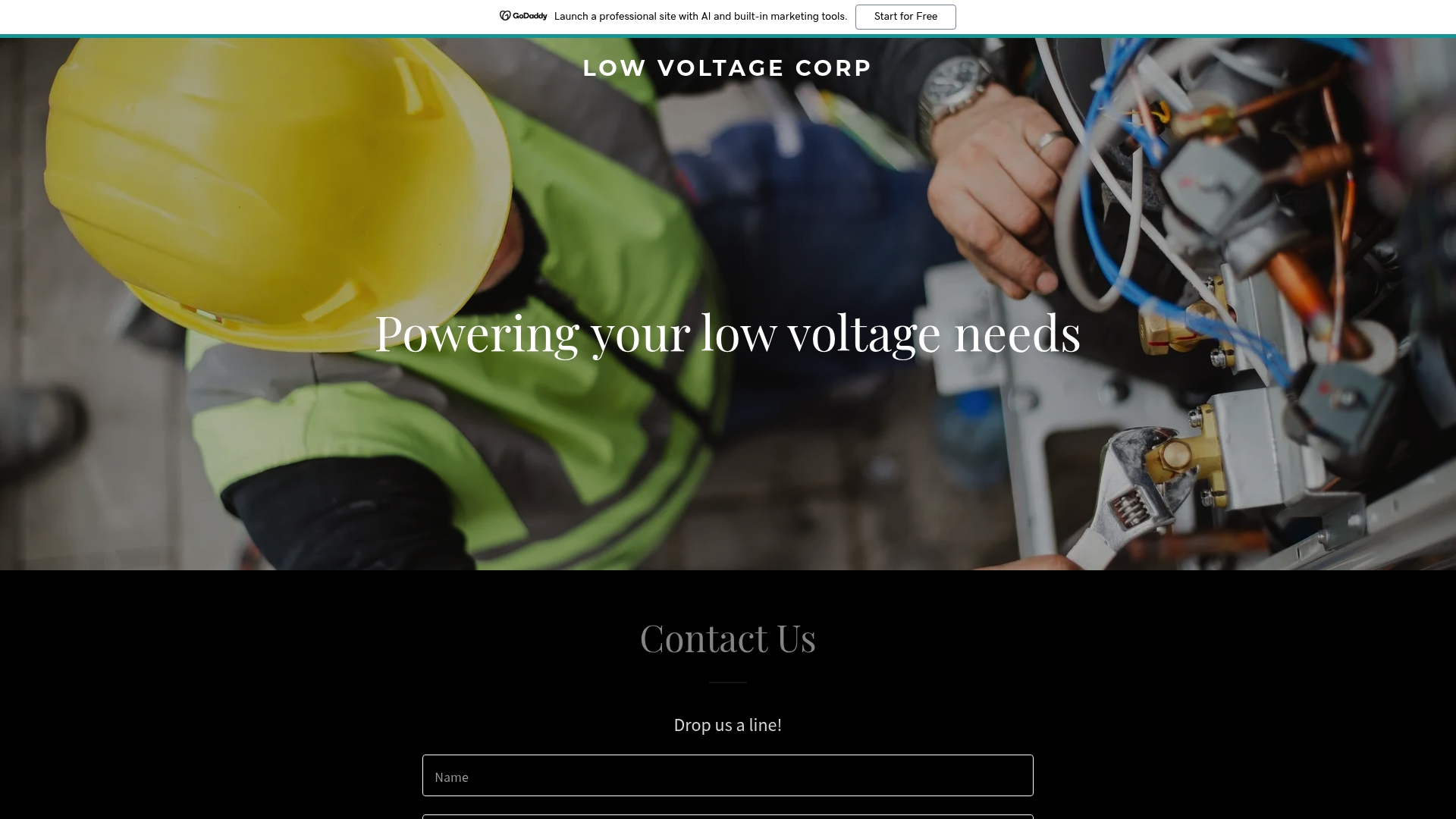
South Florida properties face unique challenges: humidity, hurricane season, aging electrical infrastructure, and utility costs that make energy savings especially meaningful. Our team works directly with building owners and facility managers to assess your current setup, identify the highest-ROI upgrades, and install systems that are built to last. Start with our resource on cost-saving security upgrades for South Florida owners to see what practical automation looks like at the property level. You can also explore the sustainability guide for facility managers for a deeper look at how integrated systems create long-term operational value.
FAQ
What are the most common examples of building automation?
The most common examples include HVAC automation, occupancy-based lighting control, automated access control, energy monitoring dashboards, and demand response systems. Each targets a specific cost or operational efficiency problem in commercial buildings.
How much can building automation systems save on energy costs?
Well-implemented building automation systems typically reduce total building energy costs by up to 31%, with payback periods ranging from 2 to 5 years depending on system type, building size, and local utility rates.
What is the easiest type of building automation to implement first?
Occupancy-based lighting controls and energy dashboards offer the lowest installation complexity and fastest payback, often under two years. They also generate the sensor data that makes more advanced automation upgrades easier to justify later.
Do building automation systems work in older buildings?
Yes. Wireless controls, particularly wireless VAV systems, were designed specifically for retrofit situations. They cut installation time per unit from 3.5 hours to roughly 45 minutes, making automation cost-effective even in buildings where running new wiring is impractical.
What is demand response automation in buildings?
Demand response automation allows a building’s systems to automatically reduce electrical load during peak grid demand periods in exchange for utility credits. Automated pre-cooling and load shedding keep occupants comfortable while the building earns revenue from the utility program.