Balancing real security needs against a tight budget is one of the most frustrating challenges South Florida property owners face. Whether you own a condo in Boca Raton, a retail strip in Hialeah, or a single-family home in Broward County, cost-saving security upgrades are not a luxury decision anymore. Rising property crime, HOA restrictions, and unpredictable insurance premiums make smart security choices a financial necessity. This article breaks down which upgrades actually pay for themselves, which ones stack discounts, and how to avoid spending money on systems that look good but deliver little real value.
Table of Contents
- How to choose cost-saving security upgrades for your property
- Cost-effective security system options that lower your insurance premiums
- Affordable DIY wireless security cameras with no monthly fees
- Stacking protective devices for maximum insurance discounts
- Navigating HOA restrictions and legal rights for security upgrades
- Comparing security upgrade options: features, costs, and savings
- Why combining professional and DIY security upgrades is often the smartest choice
- How Low Voltage Corp helps South Florida property owners save on security upgrades
- Frequently asked questions
Key Takeaways
| Point | Details |
|---|---|
| Insurance discounts | Professionally monitored security systems reduce homeowner insurance premiums by 5% to 20%, offsetting many upgrade costs. |
| DIY camera savings | Affordable wireless cameras with local storage eliminate monthly fees and are effective for budget-conscious upgrades. |
| Stack safety devices | Installing deadbolts, smoke alarms, and fire extinguishers together can multiply insurance discounts up to around 20%. |
| HOA installation rights | Federal law protects your right to install security devices, though HOAs can regulate device placement with reasonable rules. |
| Hybrid security approach | Combining professional monitoring and DIY devices offers maximum savings, greater coverage, and flexibility for South Florida properties. |
How to choose cost-saving security upgrades for your property
Smart security spending starts before you buy a single camera or sensor. The goal is not to buy the most equipment. It is to buy the right equipment for your property type, your budget, and your insurance policy.
Here is the framework that matters:
- Insurance eligibility first. Not all upgrades trigger discounts. Call your insurer before purchasing and ask specifically which systems qualify. Professional monitoring, fire detection, and CO monitoring are the most commonly rewarded categories.
- Multi-sensor systems over single-purpose devices. A system that covers burglary, fire, and carbon monoxide in one platform earns more savings than three separate devices from different brands.
- Local storage cameras over cloud-only subscriptions. Many property owners waste $10 to $20 a month on cloud plans they barely use. Cameras with onboard SD card or local NVR storage give you full footage access with no ongoing fees.
- Energy efficiency matters in South Florida. Solar-powered cameras and low-voltage systems reduce electricity draw in a state where cooling costs are already high. Every watt saved adds up over a Florida summer.
- Know your HOA rules before installation. South Florida has a dense concentration of HOA-governed communities. Some associations have placement rules for visible cameras or doorbell devices. Understanding those rules upfront saves you removal costs and legal disputes later.
Staying current on low voltage trends for property managers can also help you anticipate which technologies are gaining ground, so you invest in platforms that will remain relevant.
Cost-effective security system options that lower your insurance premiums
With your evaluation criteria set, the next step is knowing which specific systems actually move the needle on insurance costs.
Installing a professionally monitored system can reduce homeowner’s insurance premiums by 5% to 20%. On a Florida policy averaging $2,285 per year, that translates to roughly $114 to $457 back in your pocket annually. That figure matters when you are weighing whether a monthly monitoring fee is worth it.
The systems that consistently earn the best discounts share a few common traits:
- 24/7 professional monitoring with a UL-listed central station
- Fire and carbon monoxide detection integrated into the same platform
- Cellular backup so the system works even if your internet or landline goes down
- Documented installation your insurer can verify
Popular options in this category include SimpliSafe, ADT, Cove, and Ring Protect Pro. Each has different pricing models, but the key differentiator for insurance purposes is whether monitoring is professional and verifiable. Check out home security system alternatives if you want a broader comparison of what is available in the South Florida market.
| System | Monthly monitoring cost | Insurance discount potential | Local storage option |
|---|---|---|---|
| SimpliSafe | $19.99 to $29.99 | Up to 15% | Yes (with indoor camera) |
| ADT | $28.99 to $59.99 | Up to 20% | Limited |
| Cove | $17.99 to $27.99 | Up to 15% | No |
| Ring Protect Pro | $20.00 | Up to 10% | Yes (with local backup) |
Pro Tip: Ask your insurance agent specifically for the discount documentation form before installation. Some insurers require a certificate of installation from a licensed installer, not just a receipt. Getting a licensed low voltage electrician to handle setup makes that step easy.
Affordable DIY wireless security cameras with no monthly fees
Professional systems are not the right fit for every property or every budget. For coverage in secondary areas, outbuildings, parking lots, or rental units, affordable DIY cameras offer strong value without subscription fees.
DIY wireless cameras start as low as $39 to $60 and support local storage, meaning no monthly cloud fees. Here are three worth knowing:
- Guardhouse WatchEye ($39). Stores footage directly to an SD card. No app subscription, no cloud dependency. For budget-conscious coverage of a gate entrance or driveway, it is hard to beat this price point.
- eufy SoloCam S220. Solar-powered, so there is no wiring and no battery replacement schedule. For South Florida properties with year-round sun exposure, this camera practically runs itself.
- TP-Link Tapo C402. Battery-operated, privacy mode capable, and priced well under $60. Good for indoor use in rental properties or home offices where you want recording on demand without a permanent feed.
The real advantage of local storage is privacy. Your footage stays on your property, not in a vendor’s cloud. For commercial property owners with sensitive areas, that matters.
DIY security improvements work best when they complement a monitored system rather than replace it entirely. Think of these cameras as coverage expanders, not primary security infrastructure.
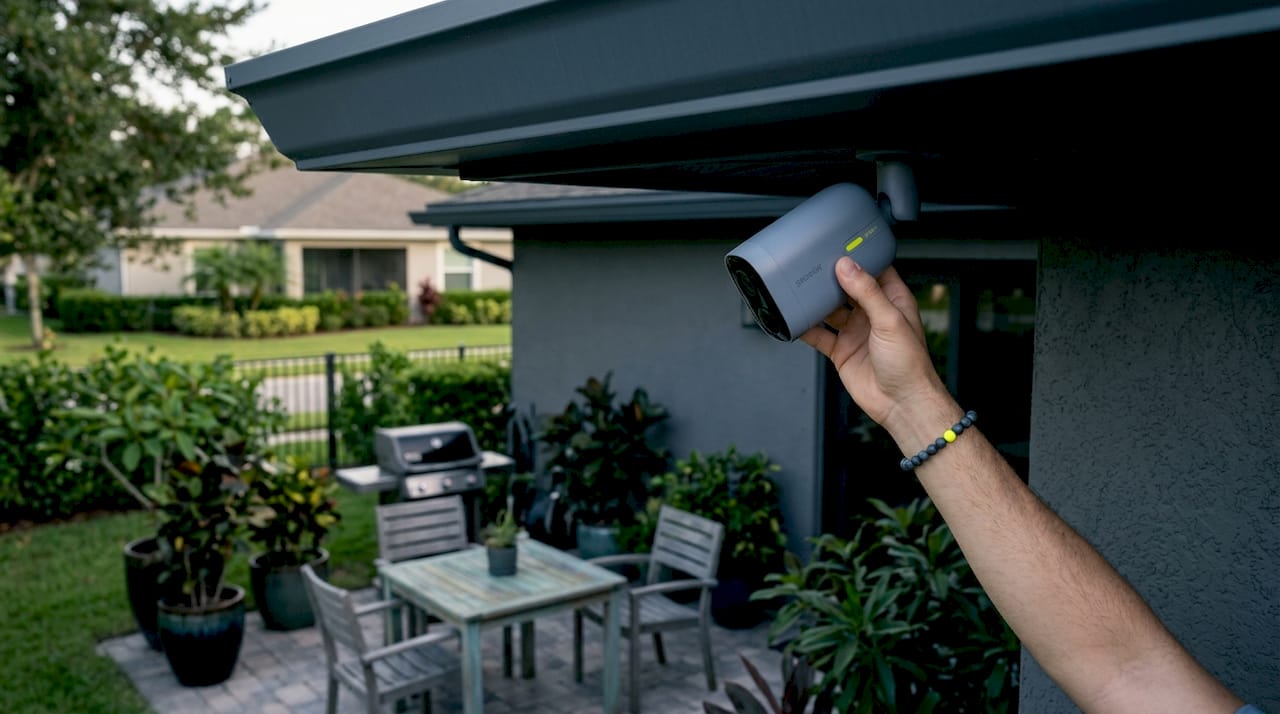
Pro Tip: Solar cameras in South Florida are especially practical because cloud cover is infrequent enough that charging is reliable year-round. Place them where running conduit would be expensive or disruptive, like detached garages, pool equipment areas, or rear fences.
Stacking protective devices for maximum insurance discounts
A single upgrade rarely unlocks the maximum discount. The real savings come from layering multiple protective devices in a way your insurer recognizes and rewards.
Here is the priority order for stacking:
- Install deadbolt locks on all exterior doors. Deadbolts alone can save 2% to 5% on your premium, and they cost $30 to $80 per lock installed.
- Add smoke detectors on every floor. Most insurers require them anyway, but documented placement earns incremental discounts.
- Place fire extinguishers in the kitchen and garage. A simple upgrade that typically saves 1% to 3%.
- Connect a monitored alarm system. This is where the biggest bracket of discounts opens. Monitored systems often unlock discounts unavailable through passive devices alone.
- Verify CO detection is part of your alarm platform. Carbon monoxide monitoring adds safety and moves you into better discount tiers with many insurers.
Protective device discounts stack, but most insurers cap total savings around 20%. That ceiling is important to know because it changes the math on premium products. If you are already at 15% through deadbolts and smoke detectors, you may only recover 5% more from adding a full monitored system. That should factor into which system tier you choose.
| Device | Typical discount | Approximate cost |
|---|---|---|
| Deadbolt locks (exterior doors) | 2% to 5% | $30 to $80 per lock |
| Smoke detectors (per floor) | 1% to 3% | $15 to $40 each |
| Fire extinguishers | 1% to 3% | $20 to $50 each |
| Monitored alarm system | 5% to 15% | $200 to $600 installed |
| CO detector (monitored) | 1% to 3% | Included in many alarm systems |
Boost security with protective devices to see how integrated low voltage setups can tie these elements together across a full property.
Navigating HOA restrictions and legal rights for security upgrades
South Florida has thousands of HOA-governed properties, and many owners mistakenly believe their association has the final word on security device installation. That is not accurate.
Under the Fair Housing Act, residents have a right to install security devices as reasonable accommodations, particularly for disabled residents. Beyond disability protections, HOAs generally cannot impose blanket bans on security cameras or alarm systems, though they can regulate placement, appearance, and installation methods.
Here is how to handle HOA situations without conflict:
- Submit a written request before installation. Document your intent and the specific device. This creates a paper trail if disputes arise later.
- Choose wireless and removable devices when possible. HOAs are far less likely to object to a battery-powered camera than to one requiring drilling into shared exterior surfaces.
- Reference federal protections if denied. Blanket bans are not enforceable under federal law. Most HOA boards will comply once they understand the legal boundary.
- Stay within aesthetic guidelines. If your HOA has rules about visible wiring or device color, following them proactively prevents unnecessary friction.
“HOAs can restrict where you place security devices and how they look, but they cannot prohibit you from protecting your property entirely. Federal housing law draws that line clearly.”
For more on how HOA security compliance intersects with technology choices in South Florida, the rules around cell signal boosters and network equipment follow the same general logic.
Comparing security upgrade options: features, costs, and savings
Before you commit your budget, a side-by-side comparison clarifies which options fit your property size, risk level, and financial goals. Note that insurance discount levels vary based on system features and monitoring type, so always verify eligibility with your specific insurer.
| Option | Upfront cost | Monthly fee | Insurance discount potential | Best for |
|---|---|---|---|---|
| SimpliSafe (monitored) | $200 to $500 | $20 to $30 | Up to 15% | Homes and small commercial |
| ADT (professional install) | $300 to $700 | $29 to $60 | Up to 20% | Larger properties, businesses |
| Guardhouse WatchEye | $39 | None | Minimal | Secondary coverage areas |
| eufy SoloCam S220 | $80 to $120 | None | Minimal | Remote locations, gates, pools |
| Deadbolts plus detectors | $150 to $300 total | None | Up to 8% combined | Any property as baseline |
For a deeper look at how these platforms compare in real South Florida installations, the security upgrade comparison resource walks through real-world setups and tradeoffs in more detail.
The bottom line: professional systems justify their cost primarily through insurance recovery. DIY cameras justify their cost through coverage without ongoing expense. The smartest budgets use both.
Why combining professional and DIY security upgrades is often the smartest choice
Here is something most security articles will not tell you plainly: going all-in on DIY is a false economy for most South Florida property owners.
The reasoning sounds logical. Skip the monitoring fee. Buy a few cameras. Cover your property yourself. But what you lose is not just rapid police dispatch. You lose the insurance discount eligibility that makes professional systems financially self-sustaining. A $25 monthly monitoring fee that saves you $380 per year on your insurance is not a cost. It is a net gain of $355.
That said, going all-in on professional systems and ignoring the gaps they leave is also a mistake. No alarm system covers your back fence, your rental unit across town, or the exterior stairwell of your commercial building with the same granularity that a $60 solar camera can. These are different tools solving different problems.
The hybrid approach works because it lets you earn the full insurance discount through a monitored system while extending your physical coverage cheaply through combining professional and DIY security devices where subscription fees would be wasteful.
South Florida adds specific layers to this calculation. Hurricane season means you need cameras and systems that handle moisture, salt air, and power interruptions. Solar cameras with local storage keep recording when your internet goes down during a storm. Cellular-backed alarm systems stay connected when your broadband fails. Neither solution alone handles both scenarios well. Together, they do.
The property owners who get the most from their security budgets are not the ones who found the cheapest option. They are the ones who matched each tool to a specific threat and let the insurance savings fund the difference.
How Low Voltage Corp helps South Florida property owners save on security upgrades
Most property owners know they need better security. The hard part is knowing exactly what to install, how to qualify for discounts, and how to stay compliant with HOA rules and local codes.
At Low Voltage Corp, we specialize in security camera installation, motorized gate systems, and wired and wireless network setup for residential and commercial properties across South Florida. We evaluate your property and recommend security system alternatives that actually align with your insurance policy, your HOA rules, and your budget. We stay current on latest low voltage trends so your system is built to last. And when something goes wrong, we offer fast solutions for low voltage issues so your protection is never down for long.
Frequently asked questions
Do professionally monitored security systems always save money after insurance discounts?
Most professionally monitored systems can reduce homeowners insurance by 5% to 20%, often offsetting monitoring fees and sometimes resulting in net savings depending on your current premium and the system you choose.
Can I install security cameras if my HOA has restrictions?
Federal law generally protects your right to install security devices as reasonable accommodations, but HOAs can regulate placement and appearance without imposing a total ban.
Are there cost-effective security cameras without monthly fees?
Yes. DIY cameras start at $39 to $60 with local storage options, and solar-powered models like the eufy SoloCam eliminate both wiring costs and subscription fees entirely.
How much can simple devices like deadbolts or fire extinguishers save on insurance?
Deadbolts save 2% to 5%, fire extinguishers typically 1% to 3%, and when stacked with other protective devices, total discounts can approach the common insurer cap of around 20%.
What is the best approach to maximize security savings in South Florida?
Combining professional monitoring for insurance discount eligibility with low-cost DIY cameras for expanded property coverage gives you the best balance of real protection and long-term savings.